




A Ukrainian cruise missile factory launched by civilians with backgrounds in construction, game design, and architecture has become one of the war's more consequential actors. The FP-5 Flamingo — developed by the Kyiv-based startup Fire Point and already confirmed in combat by President Volodymyr Zelenskyy — struck the VNIIR-Progress defense electronics plant in Cheboksary on June 10, marking the second successful hit on the same facility in under six weeks. The first attack came on May 5.
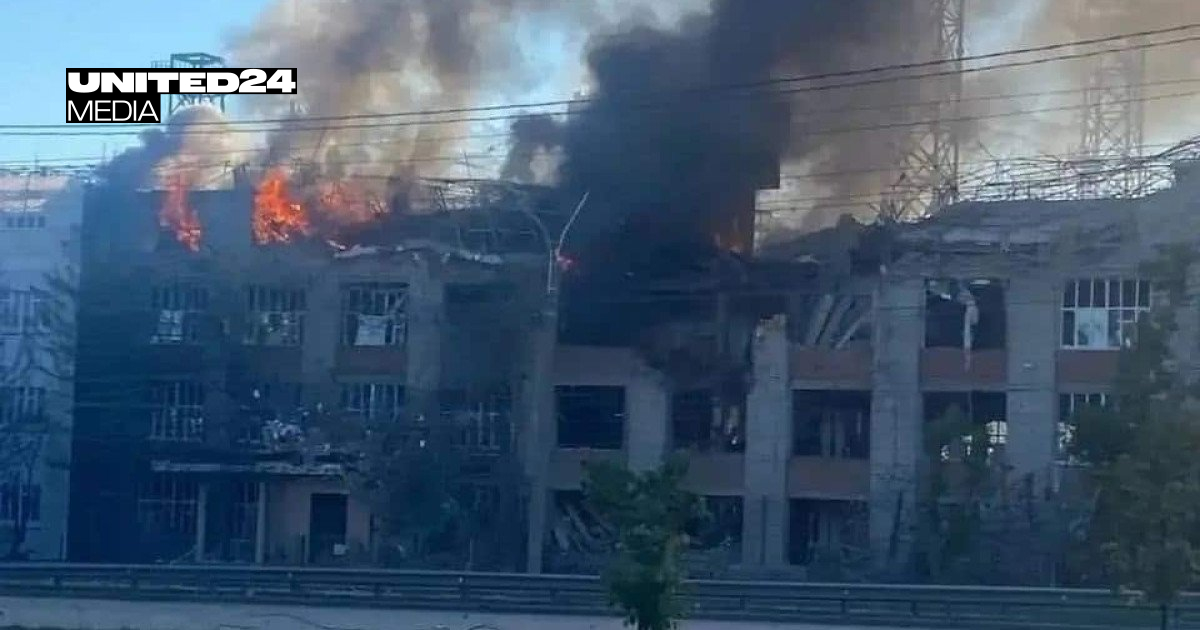
What burned in Cheboksary is not a conventional weapons factory. VNIIR-Progress, sanctioned by Ukraine, the United States, and the European Union, manufactures navigation and guidance components — specifically Kometa anti-jamming modules used in Shahed-type attack drones, Kalibr cruise missiles, Iskander-M ballistic missiles, and guided aerial bombs converted from conventional munitions. The plant, which sits more than 900 kilometers from the front line in Russia's Chuvashia region, is part of a broader industrial base that helps Russian weapons maintain accuracy against Ukrainian electronic warfare systems. Disrupting it, analysts argue, has ripple effects across multiple categories of weapons rather than any single platform.
Zelenskyy confirmed both strikes personally, describing the June 10 attack in a social media post. He said Ukrainian forces also hit the Kuibyshev refinery in Russia's Samara region, where regional governor Vyacheslav Fedorishchev reported that several industrial facilities had been damaged and three people injured. Images circulating online showed a large fire at the refinery. Ukraine's Security Service, known as the SBU, additionally targeted two oil infrastructure facilities in the Vladimir region, approximately 700 kilometers from the front line.
The June 10 wave of strikes was broad in both geography and target type. In Cheboksary, residents filmed a low-flying Flamingo missile passing over the city before the explosion at VNIIR-Progress. Monitoring groups noted that the plant had been fitted with anti-drone camouflage netting following the earlier May attack — protection that proved insufficient. Denis Shtilerman, the founder of Fire Point, posted a photograph of a missile launch on the same day without elaborating further.
The strategic calculus behind Ukraine's sustained energy campaign has grown clearer over time. Ukrainian officials have described their long-range strike program as a form of "long-range sanctions" — a way to erode the Kremlin's fuel revenues and limit its ability to supply the front. An SBU source stated that nearly 40 percent of Russia's refinery capacity was already sitting idle as a result of repeated attacks. That figure follows broader reporting indicating that drone strikes have suppressed Russian refinery processing rates well into 2026. The International Energy Agency had projected as much in an October 2025 oil-market report.
In Russia-occupied Crimea, the overnight attacks produced a different kind of controversy. A Ukrainian drone struck the building housing the "Defense of Sevastopol 1854–1855" panorama, a monumental circular painting by the 19th-century artist Franz Roubaud depicting the city's siege during the Crimean War. Mikhail Razvozhaev, the Kremlin-appointed governor of Sevastopol, declared the painting effectively destroyed and blamed Ukrainian forces for a deliberate cultural attack, calling the strike the act of "complete degenerates." He classified the blaze at level four — the highest emergency designation — with more than 80 firefighters deployed to the scene. Ukraine has not commented on the incident. The museum's own press service, however, clarified that all 39 fragments of the original Roubaud canvas had been stored elsewhere at the time of the fire and were undamaged. Analysts also noted that several Russian military facilities, including Southern Bay with its naval vessels and warehouses, are located in the immediate vicinity of the museum building.
While Ukraine pushed deep into Russian territory, Russian forces continued strikes across Ukrainian regions. A barrage of 26 drones struck the Kharkiv area overnight, killing one person and injuring 15 across the region in a 24-hour period, according to regional administration head Oleh Syniehubov. Ten more people were wounded in overnight aerial attacks on the Zaporizhzhia region, and in Odesa, Russian drones damaged two residential buildings. Ukraine's Air Force reported that air defenses intercepted 181 of 207 Russian drones launched. Russia's Defense Ministry, for its part, claimed its air defenses downed 326 Ukrainian drones during the same period.
The 1,000-kilometer front line has remained largely frozen across four years of fighting, with drone swarms on both sides grinding down any prospect of decisive ground movement. Ukraine has responded by dramatically expanding the reach and frequency of deep strikes. Zelenskyy noted recently that domestically produced weapons now account for more than 40 percent of what Ukrainian forces use at the front, with a target of reaching 50 percent by year's end — a shift that the Flamingo's performance in Cheboksary illustrates in concrete terms.
On the diplomatic front, Ukraine's Foreign Ministry spokesperson Heorhii Tykhyi said Kyiv had secured commitments for additional air defense systems and ammunition following Zelenskyy's recent visits to London and Tallinn, without naming the contributing countries. Tykhyi added that Ukraine was also in talks to obtain interceptor missiles nearing their shelf-life expiration, arguing they could be transferred to Ukraine rather than destroyed — a form of battlefield recycling that reflects just how stretched air defense stocks remain for both Kyiv and its allies.